On March 20th, 1995 there was a terrorist attack in the Tokyo subway system in Japan. The members of the cult, “Aum Shinrikyo” released toxic sarin gas inside the metro cars causing 14 deaths and the injury of 5,800 people.
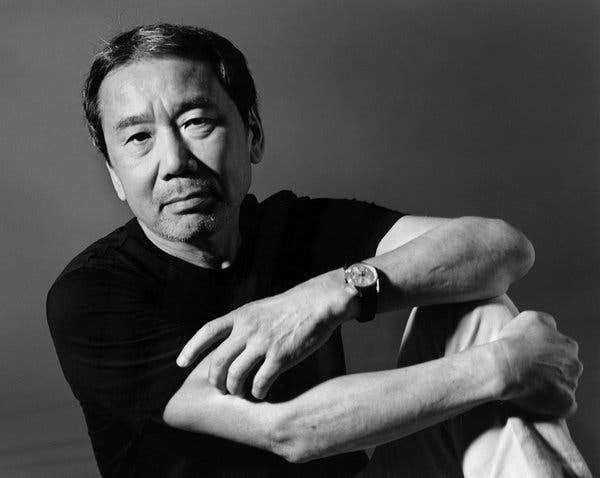
When critically acclaimed author Haruki Murakami pondered as to why a heart surgeon would quit their job, join a cult and commit a violent act towards innocent people whom he once vowed to protect, it set him off to write a book about it.
This book is called Underground: The Tokyo Gas Attack and the Japanese Psyche, which contains 60 interviews with the victims of the attack and (in the English translation) 8 interviews with cult members. This was a piece of journalistic literature released in 1997 in order to bring light to some of the issues found in Japanese society, according to Murakami. He claimed that the psychological effects of the event were causing more trouble to the victims than was being realistically acknowledged, and that the severity of the event was undermined.

This is an example of what I would like to call applied anthropology. By using unstructured interviews he allows the reader to gain an insight into the real effects that the event had on the victims so that the general population could understand how it felt to be one of these people. This would allow some of the victims to receive more empathy from other members of society like their family or co-workers.
At this moment, what spikes my curiosity about this project is how it relates to Murakami’s late 2000’s release, 1Q84.

1Q84 is a fictional book in which two unique characters leave their universes (in a mandela effect kind of way) to find love after years of not hearing a single word about each other. One of them is an assassin that specializes in killing abusive men, and the other is a ghostwriter for a successful young novelist. The book sold 1 million copies within a month and revolves around a religious cult that has incredible amounts of power. The chapters alternate between the two characters and their plotlines, which eventually come together through events that seem larger than life.
It isn’t difficult to find similarities between the fictional cult group and the real group that committed those violent acts in Japan once you start to analyze them. The fictional group, Sakigake, was created by a group of revolutionary anthropologists who were looking to create a truly self-sustainable lifestyle that allowed people to be happy in their community devoid of the issues of contemporary society. This goes wrong when some of the anthropologists become extremist buddhists who seek higher supernatural knowledge that gives them powers, which they use in the book, powers such as telekinesis and telepathy.
In the real life cult “Aum Shinrikyo” the goal was something similar, but not exactly the same. They seeked to go up the ranks of the religious cult. There were rituals and exercises that one had to practice for prolonged amounts of time in order to be promoted. The higher your rank, the less suffering you experienced and you become closer to the truth and sequentially nirvana. In Underground Murakami asks about these events which are described in detail. Some people were forced to take massive amounts of LSD in order to do a shaman like ritual that could promote you to the next level. Many of these individuals were never promoted because they never reached the expected breakthrough. Another individual went as far as to claim that they could levitate and that they were good at it.
Murakami’s work has delved into the Lacanian other in the past and it is no coincidence that the private investigator in his novel from 1995, The Wind-Up Bird Chronicle, returns. The private investigator works for a political candidate in the latter book, and in 1Q84 he works for the religious cult as they attempt to track down the assassin and the ghost writer who declined the millions of dollars offered to him to continue writing the young girl’s books.

In the Wind-Up Bird Chronicle, a Lacanian “big other” takes the protagonist’s wife away. His wife’s brother is an important politician who doesn’t want her to be with the protagonist anymore, which leads to her sudden disappearance. This big other can have an ominous presence in real life and it seems to me that it has massively influenced Murakami’s work.
Murakami’s anthropology is not a traditional anthropology or an experimental anthropology. In fact it is barely an anthropology, but it is indeed a delve into an understanding of Japanese culture and how society can interact with the Lacanian other within an individual’s ability to be a part of such a thing.
Tengo, one of the protagonists of 1Q84 decides to illegally rewrite some parts of a young girl’s book unaware that she was the fugitive daughter of the cult leader. She instantly became a sensation because of an award given by a company owned by the cult. This caused Tengo’s reading to become extremely popular without anyone being aware of it except his agent and the girl. Of course, the big other knew, but this is a purely fictional tale.
Aum Shinrikyo had a following of over 10,000, but it is highly unlikely that they ever achieved that kind of power. Or that they could have received the kind of investment that could allow them to buy publishing houses all across the board. It is difficult to know how much power freemasons could have, yet Murakami’s work is an interesting exploration about an individual’s relationship to such a powerful big other.
His work is worth understanding and is an experience that brings an individual closer to truths that one can only know if they experience them themselves. Reading Murakami is an ontological experience.
-Panchitowoo
 BeyondtheBooks